In this guide
Quick answer
The most reliable signs of termites are pencil-width mud tubes on foundation walls, piles of discarded wings near windows and doors, wood that sounds hollow or crumbles when you press it, and tiny pellet-shaped droppings (frass) below wooden items. If you find any of these, don’t disturb the area or spray it — take photos and book a professional inspection.
Termites are called “silent destroyers” for a reason: they eat wood from the inside out and avoid light and open air, so most homeowners don’t see the insects themselves. Instead, you see what they leave behind. Industry groups such as the National Pest Management Association estimate that termites cause billions of dollars in damage to US homes every year — and standard homeowners insurance usually doesn’t cover it.
The good news: caught early, termite treatment is routine and much cheaper than structural repair. Here are the 12 signs to look for, grouped by termite type.
For an overview of every common household pest, see our complete pest control guide.
Know which termites you’re dealing with
| Type | Where they live | Typical evidence | Where they’re common |
|---|---|---|---|
| Subterranean | Soil, enter from below | Mud tubes, damage along wood grain | Almost every US state; most common type |
| Formosan | Soil, very large colonies | Mud tubes, large evening swarms | Gulf Coast, Southeast, Hawaii, parts of California |
| Drywood | Inside dry wood, no soil contact | Pellet frass, kick-out holes | Southern coastal states, California, Florida |
| Dampwood | Very wet, decaying wood | Damage around leaks | Pacific Northwest, damp areas |
In the UK, termites are essentially absent from homes; there is only one historic, localized outbreak in Devon. If you’re in the UK and see wood damage, woodworm (beetle larvae) or wet rot are far more likely.
The 12 signs of termites
1. Mud tubes on the foundation
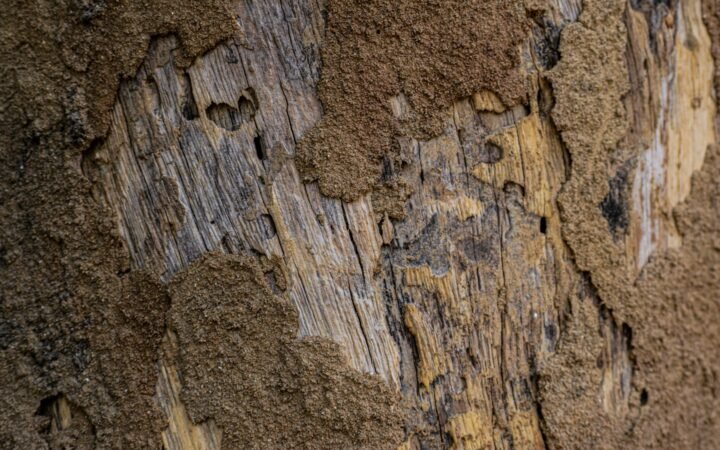
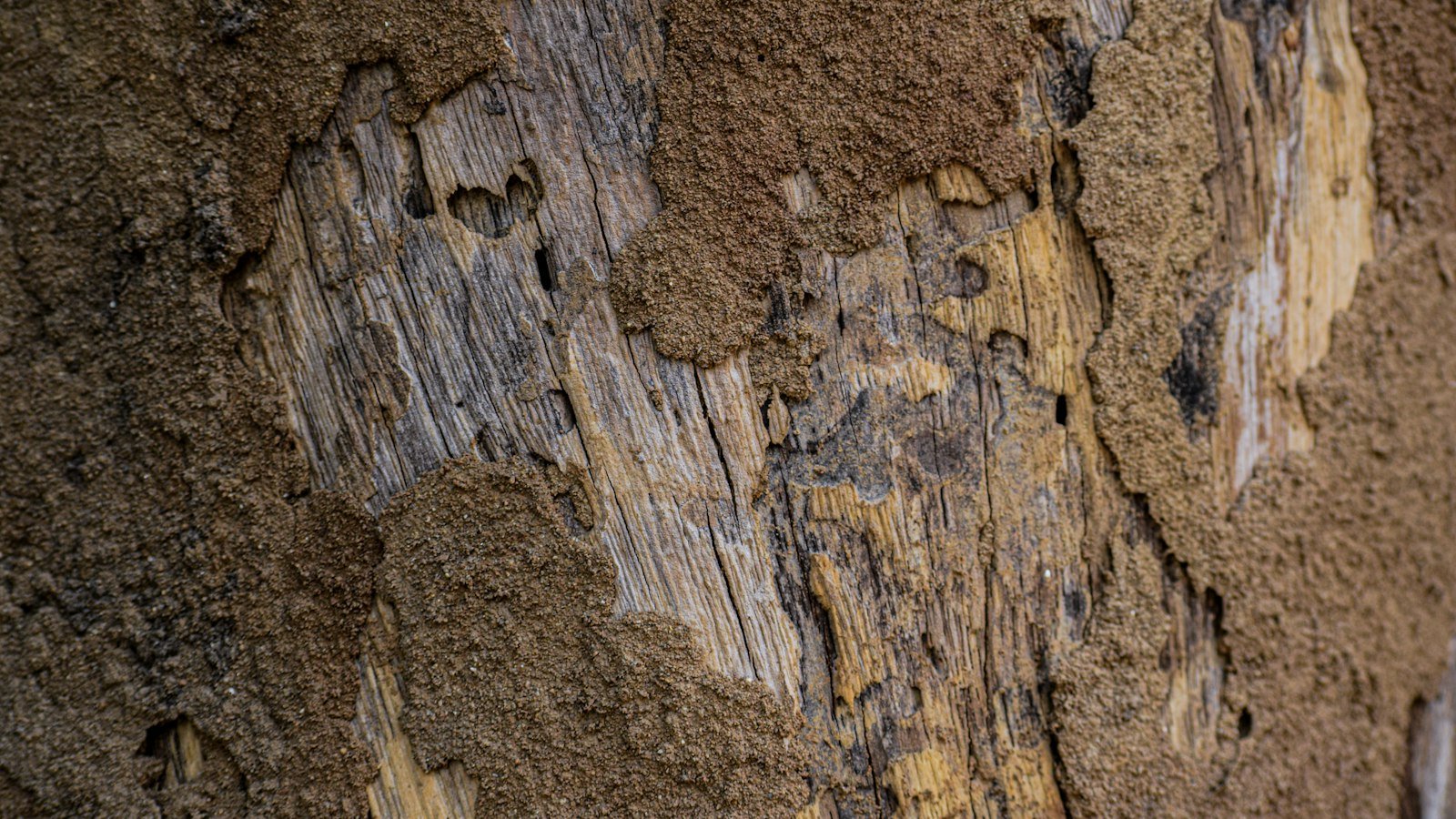
Subterranean termites dry out quickly in open air, so they build mud tubes — tunnels about the width of a pencil — from the soil up to the wood. Look on foundation walls, piers in crawl spaces, behind steps and where the slab meets the wall in garages. Break off a small section: if it’s rebuilt within a few days, the colony is active.
2. Discarded wings
When a colony matures, winged termites (“swarmers”) fly out to start new colonies, then drop their wings. Small piles of identical, translucent wings on windowsills, in spider webs or near doors are a strong sign of a colony nearby. Subterranean termites usually swarm on warm days in spring; drywood termites often swarm in late summer or fall.
3. Swarmers indoors
Seeing a swarm inside your home — especially from a wall, floor or around a light fixture — is more serious than seeing one outside. It usually means a colony is established in or under the structure. Not sure what you saw? Read Flying Ants vs Termites.
4. Hollow-sounding or damaged wood
Tap baseboards, window frames and exposed joists with the handle of a screwdriver. Termite-damaged wood often sounds hollow or papery. If you push the screwdriver in, it may break through into empty galleries packed with soil.
5. Frass (termite droppings)
Drywood termites push their droppings out of small “kick-out” holes. The pellets are tiny, six-sided and sand-like, and collect in small piles below the infested wood. Subterranean termites don’t leave frass piles; they use their droppings to build tubes.
6. Bubbling or peeling paint
Termite tunnels just under the surface can trap moisture, making paint bubble or blister in a way that looks like water damage. If there’s no leak nearby, take a closer look.
7. Tight doors and windows
Termite damage and the moisture they bring can warp frames, making doors and windows suddenly hard to open. On its own this is a weak sign (humidity does the same thing), but combined with others it’s worth noting.
8. Sagging floors or ceilings
Floors that feel spongy or sag, or ceilings with new cracks and sagging, can mean structural members have been weakened. This is a late sign — call a professional and a structural contractor.
9. Tiny holes in drywall
Pin-sized holes, sometimes with a little dirt around them, can be where termites have tunneled through.
10. Maze-like patterns in wood or drywall
Under wallpaper or in exposed wood, you may see thin lines or maze-like tunnels following the grain.
11. Clicking sounds in walls
Soldier termites bang their heads against wood when disturbed. In a quiet house you may hear faint clicking. It’s an interesting sign, but not a reliable one on its own.
12. Damaged wood outside
Check fence posts, decks, stumps, firewood piles and landscaping timbers. Termites in the yard don’t mean termites in the house, but they show that colonies are nearby.
15-minute DIY inspection
Take a flashlight and a screwdriver. Walk the full outside perimeter looking at the foundation for mud tubes. Check where wood touches soil. Inside, check the garage wall–slab joint, under sinks, around tubs and showers (plumbing gaps), and the basement or crawl space. Tap baseboards and window frames. Photograph anything suspicious with something for scale.
What attracts termites to a house
- Wood touching soil — siding, door frames, deck posts and mulch piled against the house.
- Moisture — leaking downspouts, AC condensate lines and poor drainage near the foundation.
- Cellulose near the house — firewood stacks, old stumps, cardboard stored in crawl spaces.
- Cracks in slabs and gaps around plumbing penetrations.
What to do if you find signs of termites
- Don’t spray or disturb the area. Spraying kills a few termites and makes the colony move, which makes professional treatment harder.
- Photograph and note locations.
- Book an inspection. Many pest control companies inspect for free or for a small fee. Get two or three quotes.
- Compare treatment options. The main choices are a liquid soil barrier, a bait system, or (for drywood termites) fumigation or localized treatment. See Termite Treatment Cost for 2026 price ranges, and Termite Bait Stations Compared if you’re weighing baits.
- Ask about the warranty (often called a termite bond): what it covers, whether it includes repair of new damage, and how much the annual renewal costs.
Termites work slowly. You usually have days or weeks to get proper quotes — don’t let anyone pressure you into signing on the spot.
Frequently asked questions
What do termite droppings look like?
Can you see termites crawling?
How fast do termites damage a house?
Does homeowners insurance cover termite damage?
Sources
- US EPA — Termites: how to identify and control them
- University of Kentucky Entomology — Termite control around the home
- UC Statewide IPM Program — Pest Notes: Termites