In this guide
- Step 1: Confirm it’s a German cockroach
- Step 2: Find where they hide
- Step 3: Bait properly
- Step 4: Add an insect growth regulator (IGR)
- Step 5: Remove food, water and clutter
- Step 6: Seal hiding places
- Step 7: Add boric acid dust in voids (optional)
- How long does it take?
- When to call a professional
- Frequently asked questions
Quick answer
Use gel bait, not spray. Place pea-sized dots of a quality cockroach gel in cracks near where roaches hide (hinges, under the sink, behind the fridge and stove), add an insect growth regulator (IGR) to stop breeding, remove food and water sources, and check sticky monitors weekly. Re-bait every 1–2 weeks. Most homes see a big drop within 2 weeks and control within 4–8 weeks.
German cockroaches are the most common indoor cockroach in the US, UK and much of the world, and the hardest to get rid of with store-bought sprays. They breed fast, hide in tiny cracks, and many populations have developed resistance to common insecticides. The good news: the right bait strategy works very well, even without a professional, if the infestation is small to moderate.
For an overview of every common household pest, see our complete pest control guide.
Step 1: Confirm it’s a German cockroach
| Feature | German cockroach |
|---|---|
| Size | About 1/2 to 5/8 inch (13–16 mm) |
| Color | Light brown to tan |
| Key mark | Two dark parallel stripes behind the head |
| Where | Kitchens and bathrooms — warm, humid, close to food |
| Activity | Night; daytime sightings mean a large population |
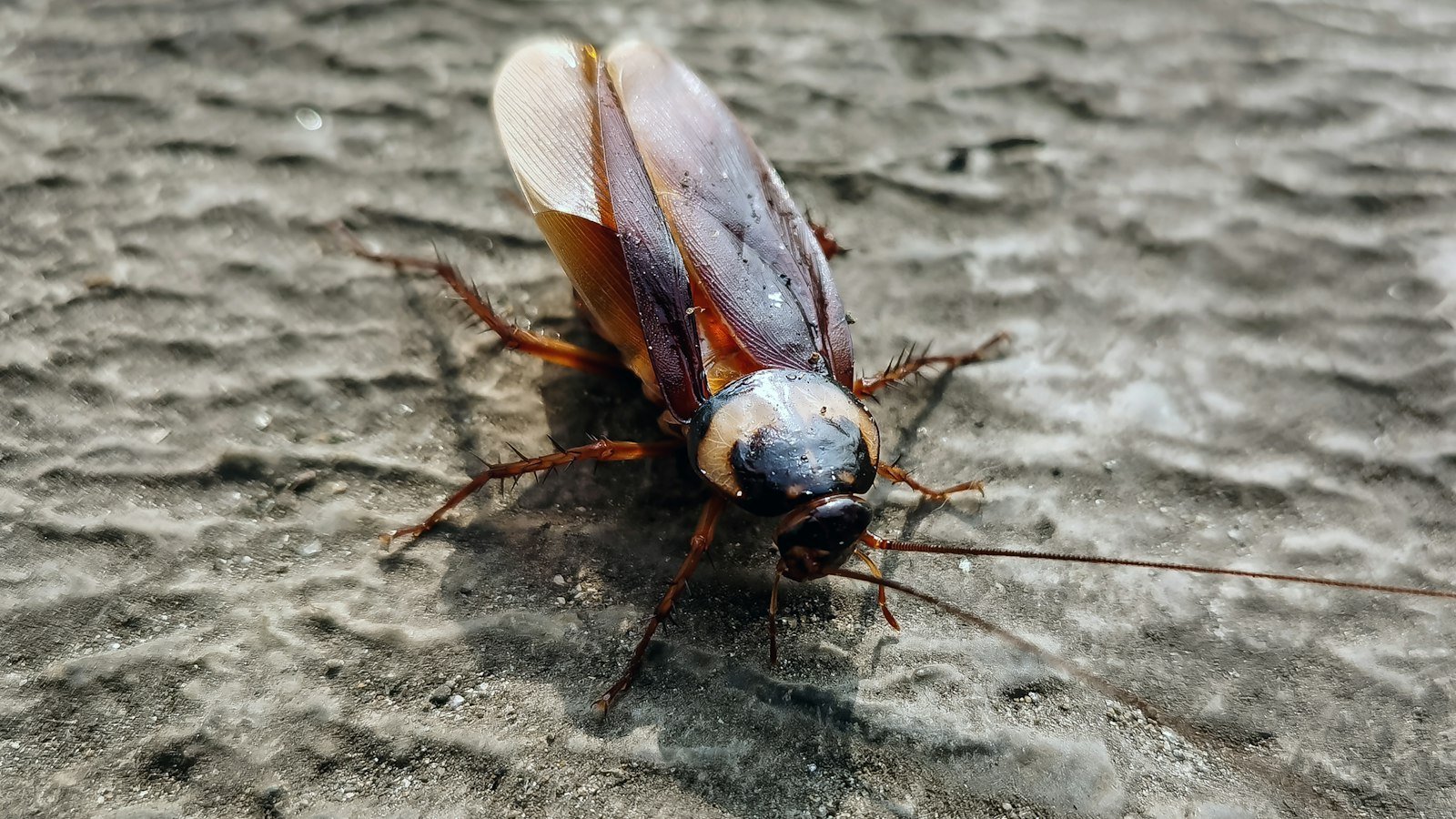
Larger dark brown or reddish roaches (American, Oriental) usually come from drains, basements or outdoors and need a different approach — mainly sealing entry points and treating the perimeter.
Step 2: Find where they hide
German cockroaches spend most of their time packed into cracks close to food, water and warmth. Use a flashlight at night and look for droppings (black, pepper-like specks), egg cases (small brown capsules) and shed skins.
Check:
- cabinet hinges and the corners inside cabinets
- under and behind the sink, around pipes
- behind and under the fridge, stove and dishwasher (warm motors)
- inside the microwave and toaster area
- around the bathroom vanity and toilet base
Place sticky monitor traps (glue boards designed for insects) in corners of these areas. After 2–3 days, the traps with the most roaches show you where to focus.
Step 3: Bait properly
Gel bait works because roaches eat it and return to the hiding spot, where they die. Other roaches then eat their droppings and bodies and are poisoned too. Placement matters more than the brand.
- Small dots, many places. Pea-sized or smaller dots, every 12–18 inches along cracks, rather than big blobs.
- In cracks, not on open surfaces. Put bait where roaches hide: hinge gaps, the seam where the countertop meets the wall, behind appliances.
- Keep the area free of sprays and cleaners. Repellent sprays and strong cleaners on the bait make roaches avoid it.
- Rotate active ingredients if bait stops working after a few weeks — use a product with a different active ingredient.
- Re-check every week. If a dot has been eaten, replace it.
Common professional-quality gels include products with indoxacarb, fipronil, abamectin or imidacloprid as the active ingredient. We compare options in Best Cockroach Gel Baits. You can find them on Amazon or at hardware stores.
Don’t use bug bombs
Total-release foggers (“bug bombs”) are a poor choice for German cockroaches. The insecticide settles on open surfaces, not in the cracks where roaches live, and can drive them deeper into walls and into neighboring apartments. They are also a fire and health hazard if used incorrectly.
Step 4: Add an insect growth regulator (IGR)
An IGR such as hydroprene or pyriproxyfen doesn’t kill adults, but it stops young roaches from developing into breeding adults. Placed alongside baits, IGR “point sources” (small discs) help break the breeding cycle. Look for cockroach IGR point sources and place one in each heavily infested cabinet.
Step 5: Remove food, water and clutter
Bait works much better when it’s the best food around.
- Wipe counters and the stovetop every night; don’t leave dishes in the sink.
- Store food — including pet food — in sealed containers.
- Take trash out nightly; use a bin with a lid.
- Fix dripping taps and wipe the sink dry before bed.
- Remove cardboard boxes and paper bags, which roaches love to hide in.
- Clean grease behind and under the stove.
Step 6: Seal hiding places
After a few weeks of baiting, caulk cracks along baseboards, backsplashes and around pipes. Seal gaps where pipes enter walls under sinks with foam or caulk. This reduces hiding spaces and limits roaches moving in from neighbors.
Step 7: Add boric acid dust in voids (optional)
A light dusting of boric acid in wall voids, behind outlet covers (with power off) and under appliances provides long-lasting control. Use a bulb duster to apply a fine, barely visible layer — heavy piles repel roaches. Keep away from children, pets and food surfaces.
How long does it take?
| Timeline | What you should see |
|---|---|
| Days 1–7 | Possibly more roaches out in daytime as baits take effect |
| Weeks 1–2 | Sharp drop in sightings; fewer roaches on monitors |
| Weeks 3–6 | Occasional small nymphs as eggs hatch; keep baiting |
| Weeks 6–8 | Monitors stay empty for 2+ weeks = under control |
Keep monitors in place for a few months. One or two roaches on a monitor is an early warning to re-bait.
When to call a professional
- You see roaches in the daytime or in many rooms (a heavy infestation).
- Someone in the home has asthma — faster control matters. See cockroaches and asthma.
- You live in an apartment and neighbors have them too — building-wide treatment works best.
- DIY baiting hasn’t made a clear difference after 4 weeks.
Frequently asked questions
Why do I see more roaches after putting out bait?
Can I spray and use bait at the same time?
What attracts German cockroaches in a clean house?
Do German cockroaches go away on their own?
Sources
- University of Kentucky Entomology — Cockroach elimination in homes and apartments
- UC Statewide IPM Program — Pest Notes: Cockroaches
- US EPA — Should I use a fogger?